
Banking Partnerships
Pre-built compliance evidence for CBE, SAMA, and PCI-DSS shortens KYC and security review with sponsoring banks from months to weeks
Cybersecurity in fintech moves at the speed of an API call. So do attackers. Cybersecurity in fintech has to match that tempo — payment fraud detection in milliseconds, PCI-DSS evidence on demand, and regulator-grade incident reporting when something goes wrong. WhiteHawk is the cybersecurity platform built for fintech companies operating under CBE, SAMA, and CBL oversight.

Fintech cyber security is not a tax on innovation. Done right, it is what makes innovation defensible. WhiteHawk gives fintech founders and CISOs the controls, evidence, and 24/7 monitoring needed to ship new products without giving regulators or banking partners reasons to slow you down.
A single breach can end a fintech. Customer trust evaporates overnight, banking partners freeze settlement, and the regulator can suspend operating licenses. Fintech and cybersecurity are inseparable - the companies that scale are the ones that treat cybersecurity for fintech as a product feature, not a back-office cost.
Customer Trust
One incident can turn adoption into churn before the postmortem is written.
Settlement Freeze
Banking partners can pause flows until containment and evidence are clear.
License Exposure
Regulators can suspend operating licenses when reporting and controls fail.
Product-Led Security
The fintechs that scale make security part of the customer experience.
Open banking and embedded finance APIs are the #1 attack vector for cybersecurity in fintech. Credential stuffing, broken authorization, and rate-limit bypass top OWASP's 2024 API security risks.
Synthetic identities, SIM-swap fraud, and credential reuse drive the bulk of fintech account compromise. Real-time behavioral analytics is the only effective defense.
Fintech teams move fast and grant broad access. Privileged-access misuse and developer credential leaks remain a top breach root cause across the sector.
One exposed S3 bucket or unrotated key can leak millions of records. Continuous cloud-posture monitoring catches drift before it becomes a disclosure
Real-time anomaly detection across transaction streams, login flows, and API calls. Behavioral models trained on fintech cyber security patterns flag fraud, money-laundering signals, and account-takeover attempts before they complete
Layered fraud controls: device fingerprinting, velocity rules, geolocation analysis, and risk-based authentication. PCI-DSS 4.0 aligned controls protect cardholder data through the full payment lifecycle
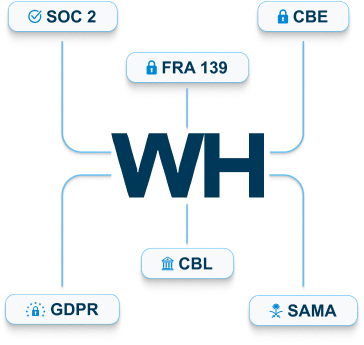
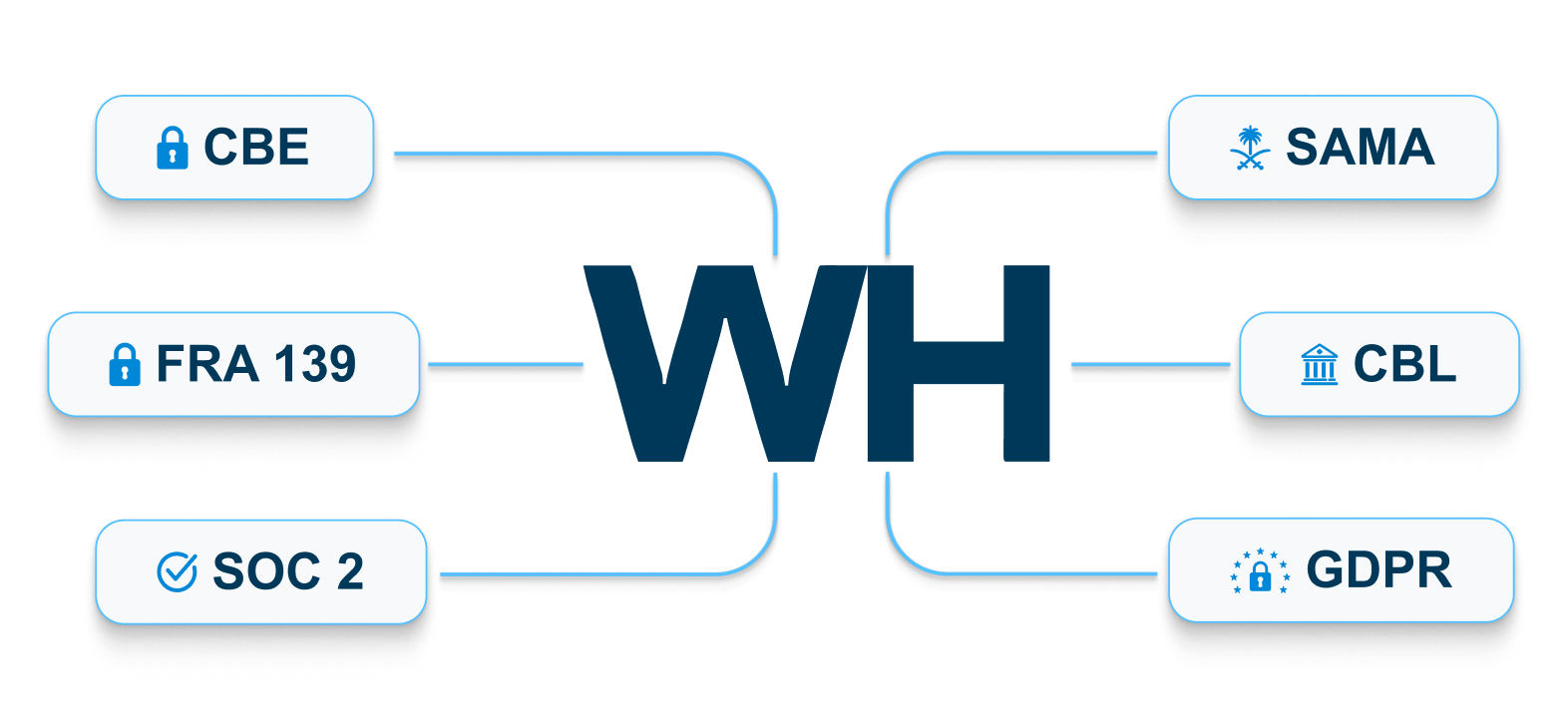
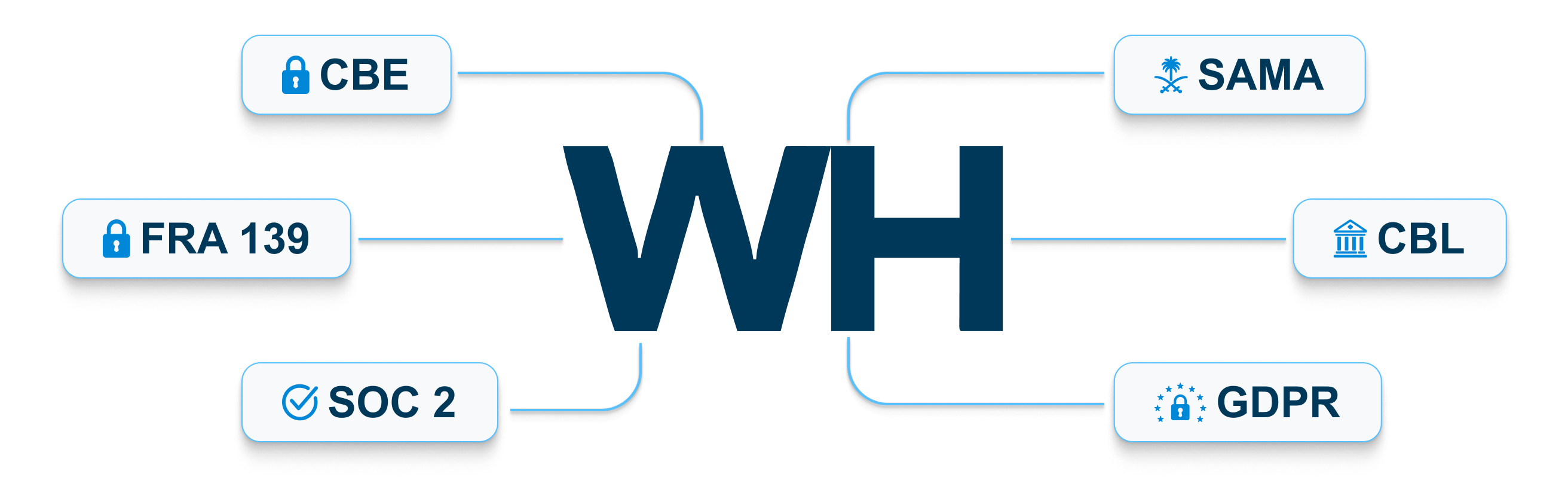
Continuous control mapping for CBE, SAMA, FRA 139, PCI-DSS 4.0, PCI PIN Security, and SOC 2 — the regulatory baseline of cybersecurity in fintech across MENA
API security testing, cloud-posture monitoring, secrets-management hygiene, and runtime application self-protection — designed for the AWS, Azure, and Kubernetes stacks fintech engineering teams actually use today
Measurable impact within the first 90 days
Pre-built compliance evidence for CBE, SAMA, and PCI-DSS shortens KYC and security review with sponsoring banks from months to weeks
Real-time behavioral defenses cut chargeback rates and reduce reserves required by payment processors operating across MENA corridors
Public security posture (SOC 2, PCI-DSS, ISO 27001) becomes a marketing asset that wins enterprise contracts, not a hidden cost
Mature security and fintech and cybersecurity is now a Series A diligence requirement across MENA fintech investors, not a Series C polish
A single breach can end a fintech. Customer trust evaporates overnight, banking partners freeze settlement, and the regulator can suspend operating licenses. Fintech and cybersecurity are inseparable - the companies that scale are the ones that treat cybersecurity for fintech as a product feature, not a back-office cost.
A quick answer to the most common platform comparison question